
Solar panels cleaning is one of the simplest yet most overlooked parts of solar panel maintenance. When dirt, dust, bird droppings, or pollution build up on your panels, sunlight can’t reach the cells properly, reducing energy output and overall system performance. Regular cleaning helps your solar panels produce more energy, last longer, and work more efficiently year-round.
This guide shares practical, safe, and proven tips to clean solar panels correctly and avoid common mistakes that reduce performance or damage the system.
Why Solar Panel Cleaning Is Important
Solar panels rely on direct sunlight to generate electricity. When a layer of dust or debris covers the surface, even partially, it reduces efficiency.
Dirty panels can:
- Reduce energy output by 10–30%
- Cause uneven heating and hot spots
- Increase wear on internal components
- Shorten system lifespan over time
Regular solar panels cleaning ensures consistent performance and protects your long-term investment.
How Often Should You Clean Solar Panels?
The frequency of cleaning depends on environmental conditions and panel location.
Recommended schedule:
- Every 3–6 months for most homes
- Every 1–2 months in dusty or dry areas
- After storms or long dry periods
- When energy production drops noticeably
If you can see dirt from the ground, it’s time to clean your solar panels.
Best Time of Day to Clean Solar Panels
Always clean panels when they are cool. The best times are:
- Early morning
- Late evening
- Cloudy days
Cleaning hot panels can cause thermal stress and leave water marks, reducing panel clarity.
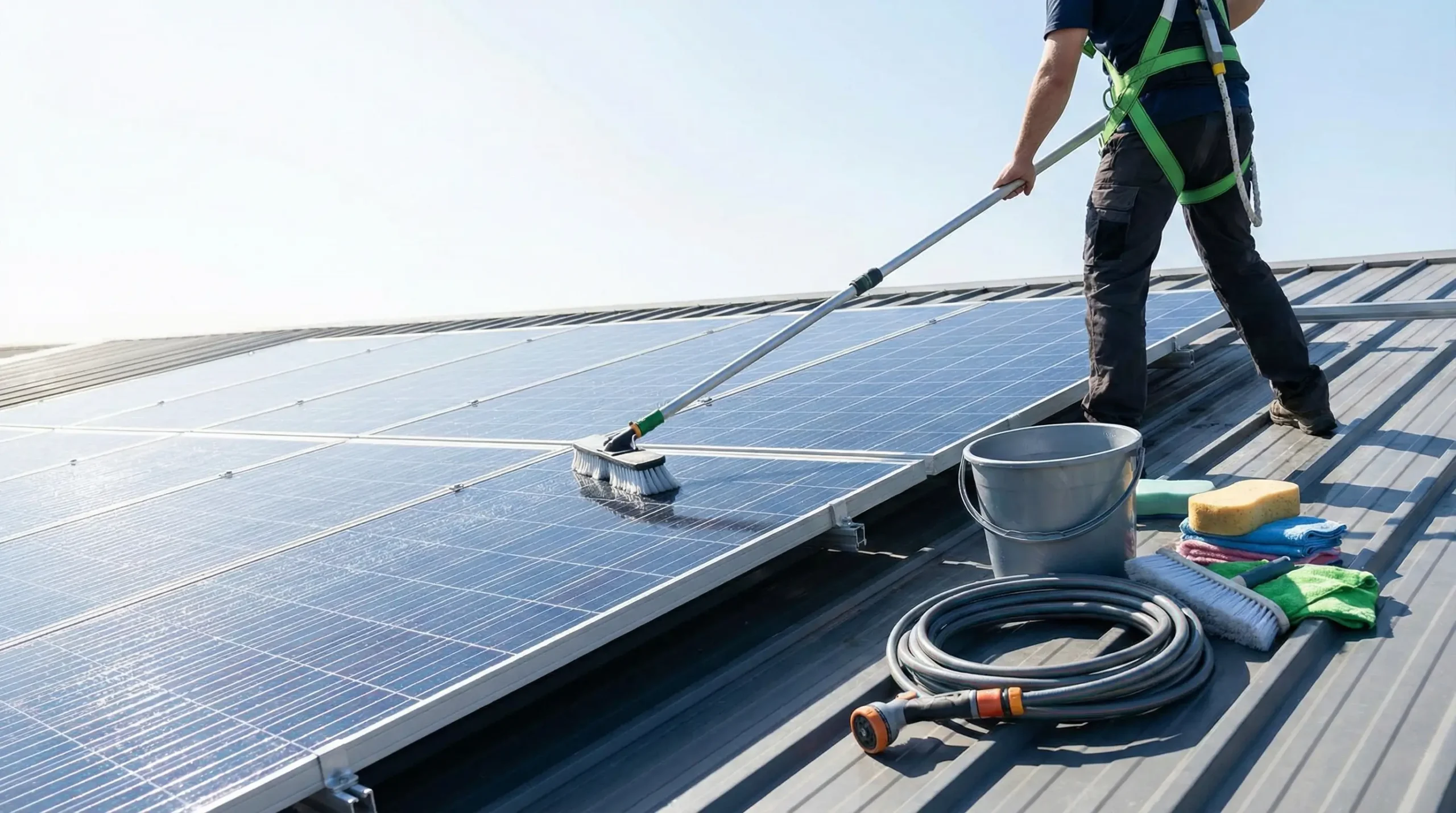
Tools You Need for Safe Solar Panel Cleaning
Using the right tools prevents scratches and coating damage.
Recommended tools:
- Soft brush or sponge
- Microfiber cloth
- Hose with gentle water pressure
- Bucket with clean water
- Mild soap (only if necessary)
- Extension pole for hard-to-reach areas
Avoid: pressure washers, abrasive brushes, and strong chemicals.
Step-by-Step Solar Panel Cleaning Process
1. Turn Off the System
Follow the manufacturer’s instructions to safely shut down your solar system before cleaning.
2. Rinse with Clean Water
Gently rinse panels to remove loose dust and dirt. This step often restores performance immediately.
3. Gently Clean Stubborn Dirt
Use a soft sponge or brush with water. Let tough dirt soak before wiping to avoid scratching.
4. Use Soap Only When Needed
If panels are oily or very dirty, use a mild soap solution. Rinse thoroughly afterward.
5. Final Rinse and Air Dry
Rinse panels completely and let them air dry or wipe lightly with a microfiber cloth to prevent spots.
Common Mistakes to Avoid
Avoid these mistakes to protect your panels:
- Using pressure washers
- Cleaning during peak sunlight
- Standing or leaning on panels
- Using harsh detergents
- Ignoring safety on rooftops
If panels are difficult to access, consider professional solar panel cleaning services.
Can Rain Clean Solar Panels?
Rain can wash away loose dust but does not remove sticky dirt, bird droppings, or pollution residue. It helps, but it is not a replacement for proper cleaning.
How Dirty Panels Affect Energy Output
Even light dirt can reduce efficiency:
- Light dust: 5–10% loss
- Heavy dust: 20–30% loss
- Bird droppings: 30%+ loss in affected areas
Regular solar panels cleaning helps maintain stable and predictable energy production.
Professional vs DIY Solar Panel Cleaning
DIY Cleaning
Best for:
- Single-story homes
- Ground-mounted panels
- Light dirt buildup
Professional Cleaning
Best for:
- Large systems
- Rooftops with difficult access
- Commercial installations
- Heavily soiled panels
Professionals also inspect for damage and loose connections during cleaning.
Extra Tips to Keep Panels Clean Longer
- Trim nearby trees
- Install bird deterrents
- Keep gutters clean
- Monitor energy output monthly
- Maintain proper tilt angle
- Schedule seasonal cleanings
Small preventive steps reduce long-term maintenance needs.
Does Cleaning Extend Panel Life?
Yes. Clean panels operate at lower temperatures, experience less stress, and maintain consistent output. Over time, this helps preserve internal components and extends system life.
FAQs
How often should solar panels be cleaned?
Solar panels should be cleaned every 3–6 months in most areas. If you live in a dusty environment or notice a drop in energy output, cleaning every 1–2 months is recommended to maintain efficiency.
What is the safest way to clean solar panels?
The safest way to clean solar panels is to use soft brushes or sponges with clean water and gentle pressure. Always clean them early in the morning or late evening when the panels are cool, and avoid pressure washers or harsh chemicals.
Does cleaning solar panels really increase efficiency?
Yes, cleaning solar panels can increase efficiency by up to 30% if the panels are heavily soiled. Clean panels allow more sunlight to reach the cells, improving energy production immediately.
Can I clean solar panels myself or should I hire a professional?
You can clean solar panels yourself if they are easily accessible and lightly dirty. For rooftop, commercial, or hard-to-reach systems, professional cleaning is safer and more effective.
Final Thoughts
Solar panels cleaning is an easy, cost-effective way to boost energy output and protect your system. With the right tools, timing, and method, your panels can perform efficiently for decades. Whether you choose DIY or professional cleaning, consistency is the key to long-term performance and reliability.
If you want to get the most out of your solar investment, make cleaning part of your regular maintenance routine.