
Electric vehicles are no longer limited to early adopters or niche use cases. They now power delivery fleets, public transport systems, service vehicles, and large commercial operations. As organizations scale their electric fleets, one question continues to surface at boardroom tables, engineering meetings, and procurement discussions: how long do EV batteries last, and what does that lifespan mean for long-term operational planning?
Battery longevity directly impacts total cost of ownership, vehicle uptime, charging infrastructure requirements, and sustainability targets. For fleet operators and infrastructure developers, understanding battery life is not about curiosity it is about making informed, future-proof investment decisions.
This guide explores EV battery lifespan from a commercial and technical perspective, explains key concepts clearly, and connects battery durability with charging strategy, infrastructure design, and energy management.
What Does EV Stand For and Why It Matters in Fleet Operations
Before diving deeper into battery performance, it is useful to clarify a foundational term.
What does EV stand for?
EV stands for electric vehicle, a vehicle powered fully or partially by electricity stored in onboard energy systems instead of relying solely on internal combustion engines.
In commercial and industrial contexts, EVs typically fall into three categories:
- Battery Electric Vehicles (BEVs): Fully electric, powered only by batteries
- Plug-in Hybrid Electric Vehicles (PHEVs): Combine batteries with fuel engines
- Hybrid Electric Vehicles (HEVs): Use electricity to assist fuel engines but are not primarily plug-charged
For fleet operators, BEVs are often the primary focus due to lower operating costs, predictable energy usage, and compatibility with centralized charging infrastructure.
How Long Do EV Batteries Last in Real-World Fleet Use?
When asking how long do EV batteries last, the most accurate answer depends on usage patterns rather than a single fixed number.
Most modern EV batteries are designed to last 8 to 15 years or several hundred thousand kilometers before their capacity drops to a point where replacement may be considered. Importantly, battery life does not end suddenly. Instead, batteries gradually lose their ability to hold a full charge, a process known as degradation.
In fleet environments, battery lifespan is influenced by:
- Daily driving distance and duty cycles
- Frequency of fast charging
- Energy load consistency
- Temperature exposure
- Charging infrastructure quality
Vehicles used for predictable routes and scheduled charging often experience slower degradation than those operating under irregular or high-stress conditions.
Battery Degradation Explained in Practical Terms
Battery degradation refers to the gradual reduction in usable energy capacity over time. A battery that originally provided 100% range may deliver 85–90% after several years of use.
For fleet operators, this does not necessarily signal failure. Many fleets continue operating vehicles effectively even after moderate capacity reduction, particularly when routes are well-planned and charging is optimized.
Key contributors to degradation include:
- High charging speeds used excessively
- Frequent deep discharge cycles
- Sustained exposure to high temperatures
- Inconsistent energy management
This is where infrastructure strategy becomes critical. Battery health is directly linked to how energy is delivered, managed, and replenished.
The Role of Charging Infrastructure in Battery Longevity
Battery lifespan is not determined by the vehicle alone. Charging systems play an equally important role.
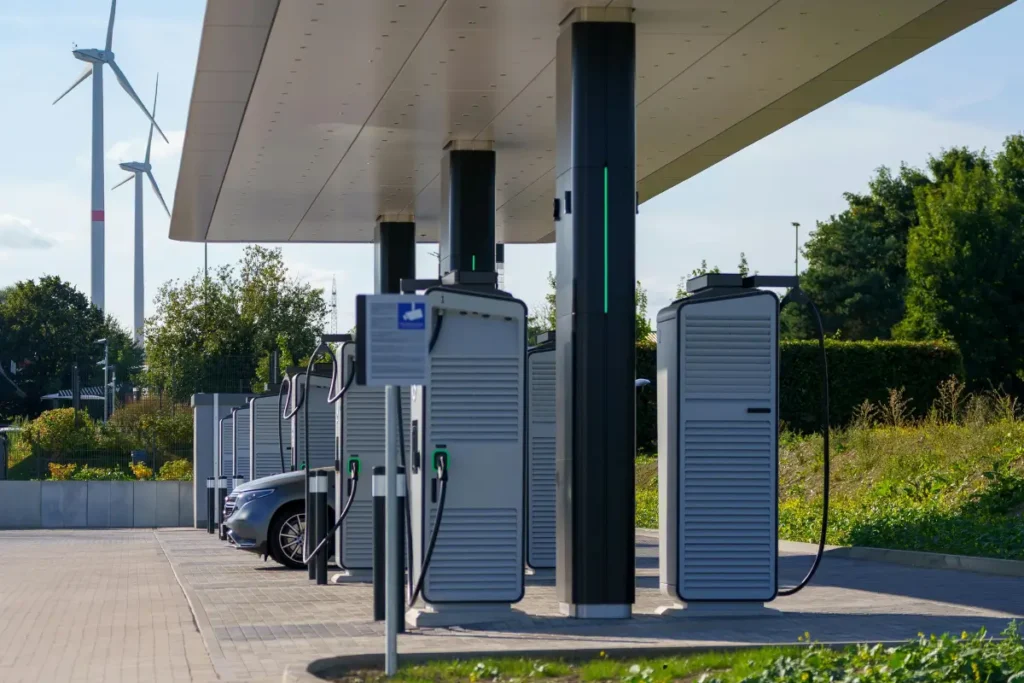
Poorly designed charging setups can accelerate degradation by exposing batteries to unstable power delivery, unmanaged peak loads, or excessive high-rate charging. In contrast, intelligent charging systems help extend battery life by:
- Balancing charging speeds based on vehicle needs
- Reducing thermal stress
- Managing peak demand
- Supporting predictable charging schedules
For fleet depots, scalable charging solutions combined with advanced energy storage can significantly reduce strain on vehicle batteries while improving operational efficiency.
Why Fleet Battery Longevity Is a Business Issue, Not Just a Technical One
Understanding how long do EV batteries last is not only an engineering concern. It has direct financial and strategic implications.
From a business perspective, battery lifespan affects:
- Capital planning: Timing of vehicle replacement
- Operational uptime: Reduced downtime due to battery stress
- Energy costs: Efficient charging lowers peak demand charges
- Sustainability reporting: Longer battery life reduces environmental impact
Fleet managers and energy decision-makers increasingly evaluate vehicles and infrastructure together, rather than as separate investments.
Second-Life Use and End-of-Life Planning
Even when EV batteries are no longer optimal for vehicle propulsion, they often retain significant energy storage capability. Many organizations explore second-life applications, such as:
- Stationary energy storage
- Load balancing for charging depots
- Backup power systems
Planning for second-life use extends the overall value of battery assets and supports long-term sustainability goals.
How Smart Energy Systems Support Battery Performance
Advanced energy systems, including hybrid storage solutions, are becoming a critical part of modern fleet charging environments. These systems help:
- Smooth power delivery
- Reduce grid stress
- Support ultra-fast charging without overloading batteries
- Improve charging consistency across large fleets
By pairing EV fleets with intelligent charging and energy storage, organizations create conditions that support battery longevity while maintaining operational speed.
Common Misconceptions About EV Battery Life
Despite growing adoption, several misconceptions still persist:
- Fast charging always damages batteries.
When managed correctly, fast charging does not inherently shorten battery life. - Battery replacement is inevitable within a few years.
Most batteries last well beyond initial warranty periods. - Degradation makes EVs unusable.
Moderate degradation often has minimal impact on fleet operations.
Clear understanding helps decision-makers avoid overly conservative planning that may slow adoption or inflate costs.
Planning Fleet Charging With Battery Lifespan in Mind
Long-term success with electric fleets requires aligning vehicle selection, charging strategy, and energy infrastructure.
Best practices include:
- Designing charging schedules around operational patterns
- Using scalable charging solutions that grow with fleet size
- Integrating energy storage to stabilize power delivery
- Monitoring battery health through data-driven systems
This integrated approach ensures that vehicles operate within optimal conditions throughout their lifecycle.
Final Words
For organizations investing in electric mobility, understanding how long do EV batteries last provides more than reassurance it enables smarter decisions across operations, infrastructure, and energy management.
EV batteries are built for longevity, especially when supported by well-designed charging systems and intelligent energy solutions. Fleets that align charging strategy with battery health gain longer vehicle lifespans, lower operational costs, and greater resilience as electrification scales.
As electric fleets continue to expand, the organizations that think holistically combining vehicles, charging, and energy storage will be best positioned to achieve reliable performance and long-term value.