
Power reliability on water or in remote setups isn’t a luxury it’s essential. From marine vessels to offshore installations, ensuring continuous electricity is critical for both safety and operational efficiency. Enter the deep cycle marine battery: a solution designed to deliver sustained, long-duration power rather than short bursts. Unlike traditional starting batteries, these systems can repeatedly discharge and recharge without losing efficiency, making them ideal for mission-critical applications. Whether you’re managing a telecom backup system, supporting EV fleet charging, or designing an off-grid marine system, understanding how these batteries work and selecting the right type ensures uninterrupted energy and long-term reliability.
What Is a Deep Cycle Marine Battery?
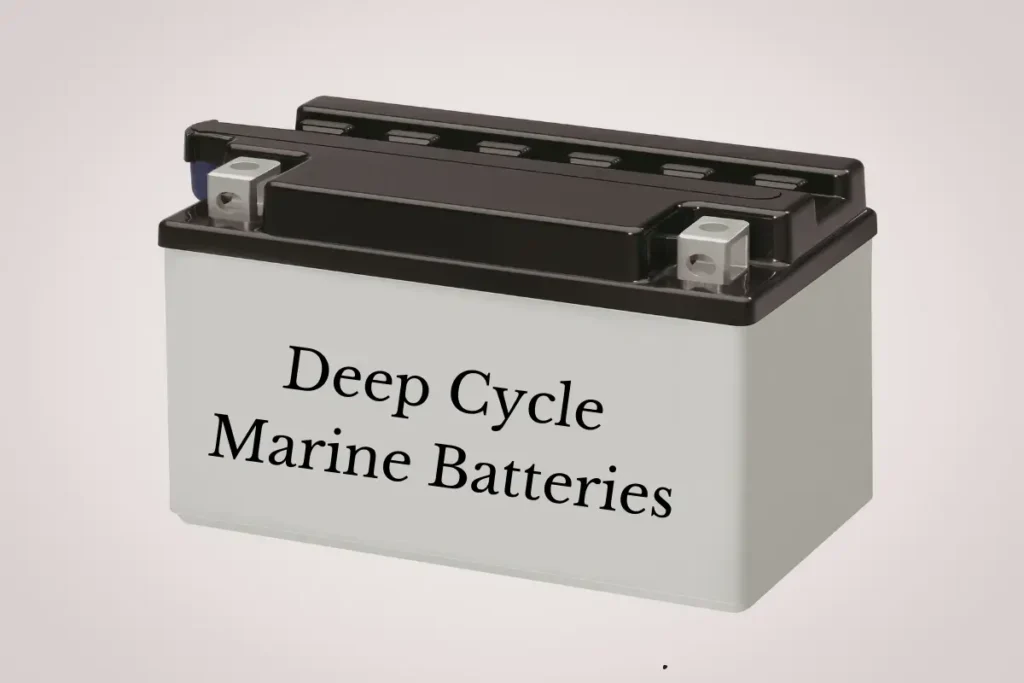
A deep cycle marine battery is designed to provide consistent energy over extended periods, unlike standard starter batteries meant only for short bursts of high current. Think of it as the difference between a sprint and a marathon: starter batteries sprint to start an engine, while deep cycle batteries run the boat’s lights, electronics, and essential systems over hours or even days. These batteries are built with thicker plates and robust internal structures to withstand repeated discharge cycles without damage. Available in lead-acid, AGM, gel, and lithium chemistries, deep cycle marine batteries combine durability, safety, and consistent performance, making them the backbone of reliable power for both recreational and industrial marine environments.
How Deep Cycle Marine Batteries Work
Understanding how these batteries operate helps engineers and energy managers make precise system decisions.
Discharge Characteristics
Deep cycle batteries are engineered to deliver power steadily over a long duration. Unlike starter batteries that drop voltage quickly, deep cycle units maintain a consistent energy output, even under high-demand conditions.
Charge Efficiency
Charge acceptance varies by chemistry. Lithium and AGM batteries typically offer higher efficiency, converting more of the input energy into usable storage with less heat loss. Correct charging profiles are essential to preserve lifespan and prevent damage.
Plate Design & Internal Structure
Thicker, denser plates provide structural integrity and reduce the risk of degradation over repeated cycles. Lead-acid batteries may have sponge-like plates, while lithium units use modular cells for scalable energy storage.
Thermal Management Behavior
High temperatures reduce battery life. Effective marine battery systems incorporate thermal management strategies such as sealed housings or integrated monitoring to keep internal temperatures in safe operating ranges.
Understanding these mechanics ensures engineers select batteries that match load profiles, environmental conditions, and operational longevity.
Types of Deep Cycle Marine Batteries
Selecting the right battery chemistry impacts performance, cost, and maintenance.
Flooded Lead-Acid
Traditional and cost-effective, flooded lead-acid batteries provide reliable performance. They require regular maintenance, including water top-ups, and must be ventilated properly to prevent gas buildup.
AGM (Absorbent Glass Mat)
AGM batteries are sealed, maintenance-free, and resistant to vibration ideal for marine environments. They offer higher charge efficiency and are less prone to sulfation compared to flooded lead-acid units.
Gel
Gel batteries use silica to suspend the electrolyte, preventing leaks and enhancing deep discharge capability. They’re excellent for extreme conditions but are more sensitive to overcharging.
Lithium (LiFePO₄)
Lithium iron phosphate (LiFePO₄) batteries are lightweight, maintenance-free, and deliver long cycle life (3,000–6,000 cycles). With high energy density and fast charging capabilities, they’re ideal for high-demand applications. Their modular design allows parallel or series expansion for larger systems, similar to Solid-State Battery solutions for advanced industrial setups.
Each chemistry has trade-offs in cost, weight, and lifecycle, making careful selection critical for mission-critical deployments.
Key Performance Metrics for Engineers
Performance isn’t just about voltage engineers consider multiple technical metrics when selecting marine batteries:
Depth of Discharge (DoD)
Defines how much energy can be safely drawn without harming battery longevity. A higher DoD offers more usable energy but may reduce total cycle life.
Cycle Life
Cycle life measures how many charge/discharge cycles a battery can endure before capacity drops below 80%. Lithium batteries excel here compared to traditional lead-acid chemistries.
Charge Rate (C-Rate)
Specifies how quickly a battery can safely accept a charge. High C-rate batteries support rapid charging for industrial applications like EV fleet support.
Round-Trip Efficiency
The ratio of energy retrieved versus energy put in. Higher efficiency reduces waste and operational costs, particularly in renewable-powered systems.
These metrics directly influence system sizing, cost, and reliability. Choosing batteries with superior DoD, cycle life, and efficiency ensures optimal performance for High-Voltage Battery Solutions and other advanced setups.
Industrial & Mission-Critical Applications
Deep cycle marine batteries aren’t just for boats—they’re integral to industrial and high-demand power systems:
Telecom Backup
Maintaining uninterrupted service in remote towers relies on batteries capable of repeated deep discharge. Off-grid telecom stations benefit from high-efficiency, low-maintenance solutions like Off-Grid Power Systems.
Renewable Storage & Peak Shaving
Pairing deep cycle batteries with solar or wind systems allows energy managers to shave peak loads, reducing grid dependency and costs.
Marine & Offshore Systems
Boats, offshore platforms, and unmanned systems require reliable power under harsh conditions. AGM or lithium chemistries provide vibration resistance, thermal stability, and low maintenance.
EV Charging Support
For fleet operations, deep cycle batteries buffer high-demand EV charging, ensuring power stability and preventing grid strain.
Selecting the right battery chemistry and capacity ensures uptime, reduces maintenance, and protects critical systems in all these environments.
How to Choose the Right Deep Cycle Marine Battery
Selecting the ideal battery involves technical analysis:
Sizing & Load Calculations
Evaluate the total energy demand and peak loads. Engineers calculate Amp-hour requirements and Days of Autonomy (DoA) to prevent undersizing.
Chemistry Selection
Consider maintenance, weight, cycle life, and environmental conditions. Lithium batteries excel for high-demand, high-cycle applications; AGM or gel batteries work well in moderate-duty systems.
Temperature + Safety Considerations
Ensure batteries operate within safe temperature ranges. Include protection devices like fuses, disconnects, and a BMS (Battery Management System) to monitor performance.
TCO & Lifecycle Cost Analysis
Balance upfront cost against cycle life, efficiency, and maintenance needs. Advanced solutions such as High-Voltage Battery Solutions or solid-state technologies may have higher initial costs but deliver superior ROI in long-term operations.
By combining sizing, chemistry, and safety considerations, engineers design robust, high-reliability energy storage systems for mission-critical applications.
Installation & Operation Best Practices
Proper installation ensures long-term performance:
Wiring & Configuration
Correct cable sizing prevents voltage drops and heat buildup. Series or parallel bank configurations must match system voltage and capacity requirements.
BMS, Fuses & Protection
Implement Battery Management Systems and protective devices to prevent overcharge, over-discharge, and short circuits.
Mounting & Ventilation
Secure batteries to withstand vibration, and provide adequate ventilation for heat dissipation. Proper environmental housing extends lifespan and improves reliability.
Adhering to these practices ensures that batteries operate safely and efficiently in demanding marine or industrial conditions.
Charging & Maintenance Guidelines
Long-term battery health depends on proper charging and monitoring:
Correct Charging Profiles
Follow chemistry-specific voltage and current limits to prevent damage. Lithium and AGM systems require precise charging curves.
Temperature Compensation
Adjust charging based on ambient temperature to optimize efficiency and lifespan.
Monitoring & Smart Controllers
Intelligent monitoring platforms track state-of-charge, cycle count, and internal resistance. For advanced industrial setups, integrating with Graphene Supercapacitors or hybrid systems enhances performance and reliability.
Regular maintenance, monitoring, and adherence to manufacturer guidelines maximize uptime and extend battery life.
Conclusion
A deep cycle marine battery is more than a power source it’s the cornerstone of reliable, mission-critical energy systems. From maintaining telecom infrastructure to supporting off-grid marine operations or EV fleet charging, selecting the right chemistry, capacity, and installation practices ensures uninterrupted performance. Coupled with proper monitoring and maintenance, these batteries provide durability, efficiency, and peace of mind. Engineers and energy managers can confidently design high-reliability systems that withstand repeated cycles, environmental stress, and long-term operational demands.