
If your work depends on reliable, high-performance energy systems, understanding how to monitor the lifespan of an electric vehicle battery becomes essential. EV batteries are long-term assets, but their health shifts over time as they face changing loads, temperatures, and charging patterns. Knowing how these changes happen helps you keep operations predictable and avoid unexpected downtime. Many professionals also compare traditional batteries with newer alternatives like graphene-based storage to better understand long-term performance. With the right tools and data, you can confidently track EV battery health and make smarter decisions for long-term reliability.
Understanding EV Battery Lifespan
Key factors affecting lifespan
EV battery lifespan depends on several variables: charging habits, temperature exposure, driving or load patterns, and depth of discharge. These factors shape overall electric vehicle battery health and influence long-term reliability.
Typical degradation patterns
Most lithium-ion packs follow predictable degradation curves. In the first year, slight wear appears. After that, the rate slows and becomes more stable. Tracking the electric vehicle battery degradation rate helps you compare actual performance to expected patterns and identify any unusual behavior early.
Lifespan expectations for commercial and fleet applications
Fleet vehicles, heavy-duty systems, and industrial EVs often experience faster wear simply because they cycle more often and operate under higher loads. For these applications, EV battery monitoring and battery degradation monitoring become essential to forecast replacement needs and maintain uptime.
Core Indicators of Battery Health
State of Health (SoH)
State of Health (SoH) is the clearest snapshot of EV battery lifespan. It compares current capacity and performance to the original state. A drop in SoH means reduced energy availability and shorter range or runtime.
Depth of Discharge (DoD)
DoD measures how much energy is drawn during each cycle. Higher DoD can speed up EV battery degradation. Keeping DoD within healthy ranges improves electric vehicle battery life expectancy.
Cycle count
Every full charge and discharge adds to the cycle count. EV battery cycle life varies by chemistry and usage, but monitoring cycles helps estimate long-term wear accurately.
Charge/discharge efficiency
A healthy battery returns most of what it stores. When charge/discharge efficiency begins to slip, it often means internal resistance is growing. This directly affects EV battery performance metrics.
Temperature performance trends
Heat is one of the biggest threats to electric vehicle battery health. Cold conditions can reduce performance, while sustained heat accelerates damage. EV battery temperature monitoring helps you understand how the pack reacts under different working environments and loads.
Methods to Monitor EV Battery Lifespan
Telemetry-based monitoring systems
Telemetry systems collect real-time battery health data, transmit it wirelessly, and make it easy to track performance across vehicles or distributed assets. EV battery telemetry helps spot issues before they escalate.
OEM diagnostic tools
Most electric vehicles include built-in diagnostic software that tracks SoH, temperature, voltage, and charging patterns. These systems support EV battery condition monitoring and electric vehicle battery diagnostics.
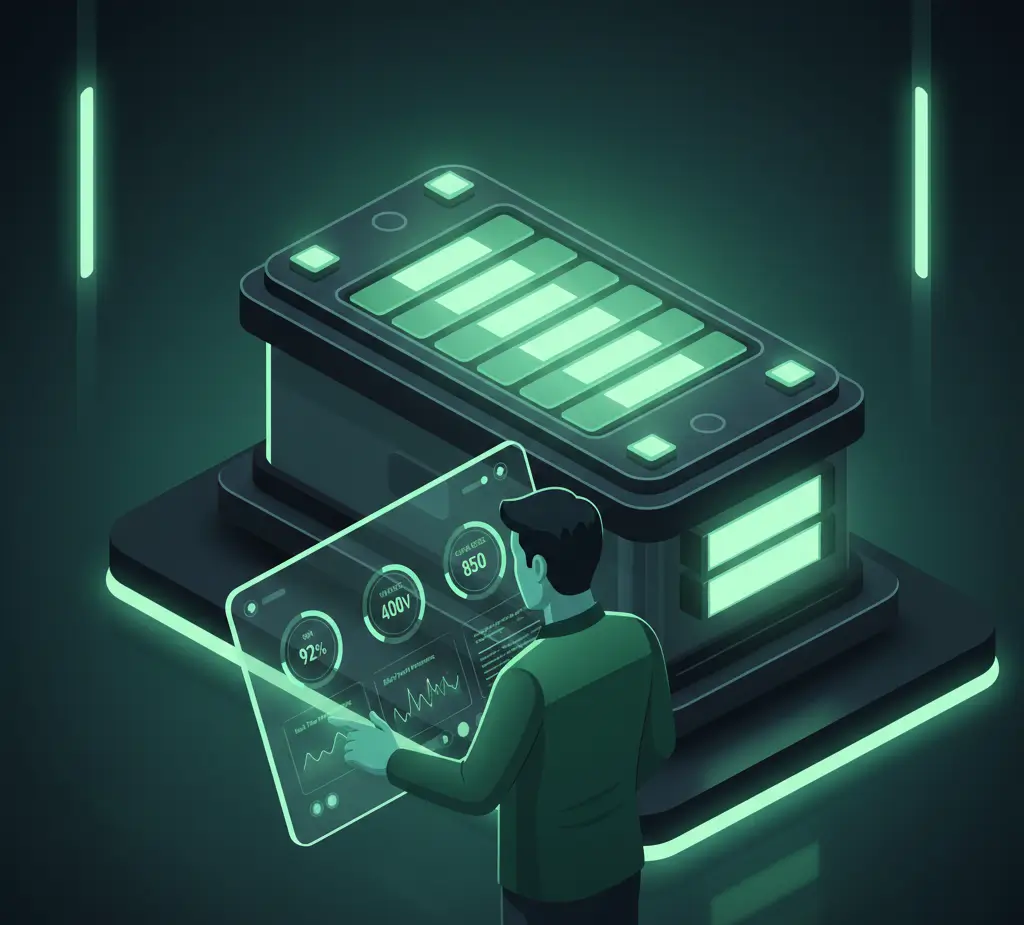
Third-party battery analytics platforms
Third-party platforms often provide deeper analytics, predictive battery health monitoring, and cross-fleet performance comparisons. They can offer clearer insights than OEM tools alone, especially when handling multiple models or large fleets.
Step-by-Step: How to Track Battery Performance Data
Identify available data sources
Start by reviewing which data streams are already accessible BMS data, OEM apps, cloud dashboards, sensors, or third-party EV battery analytics tools.
Set up regular data logging
Consistent EV battery performance monitoring is key. Log SoH, DoD, temperature, cycle count, and efficiency. This creates a complete picture of behavior over time.
Benchmark baseline performance
When a battery is new, record its performance metrics. This becomes your benchmark for battery lifecycle analysis and helps you detect irregularities later.
Compare trends against expected degradation curves
Plot performance monthly or quarterly. Compare it to the expected EV battery degradation curves for your chemistry type. A sudden drop may indicate temperature issues, excessive load, or aging beyond the statistical norm.
Report insights for operational planning
Translate technical data into clear decisions: scheduling maintenance, adjusting charging habits, or planning replacements. Good reporting supports operational reliability, especially in EV fleet battery monitoring.
Tools and Technologies for Battery Health Monitoring
Battery management systems (BMS)
The BMS is the heart of EV battery monitoring. It tracks voltage, current, temperature, SoH, and other critical values. BMS monitoring ensures safe performance and early issue detection.
Cloud and IoT monitoring solutions
Cloud platforms collect data continuously, sync across multiple assets, and offer useful dashboards. They also allow deeper analysis than traditional onboard tools.
Predictive analytics and AI-based forecasting
Predictive tools estimate future battery condition based on EV battery predictive analytics. They evaluate historical patterns, temperature impacts, fast-charging exposure, and charging cycles.
During this discussion, it’s useful to explore innovations like advanced graphene-driven energy devices that push the boundaries of fast charging and high durability. Linking to solutions such as a graphene supercapacitor battery gives readers an interesting look at next-generation storage options.
Monitoring for High-Demand Use Cases
Fleet-heavy usage patterns
Fleets operate under constant motion, with tighter schedules and less downtime. These conditions add stress to battery life. Using dedicated tools for EV fleet battery monitoring helps ensure long-term reliability. For perspective, large-scale systems like high-voltage rack batteries offer useful benchmarks for evaluating performance in high-demand environments.
Fast-charging environments
Fast charging is convenient but can heat the battery and speed up wear. Tracking EV fast-charging impact on battery life helps you adjust charging schedules and reduce avoidable stress.

High-temperature or remote operational conditions
When vehicles operate in harsh climates, batteries work harder. EV battery temperature monitoring becomes essential to avoid overheating, voltage drops, or rapid SoH decline. Remote locations create unique challenges, making consistent data collection even more important.
Best Practices to Extend Battery Lifespan
Optimal charging strategies
Avoid keeping batteries at extreme high or low states of charge for long periods. Consistent mid-range charging slows EV battery degradation.
Temperature control techniques
Keep batteries cool whenever possible. Shade, airflow, or thermal management systems help protect electric vehicle battery health.
Managing high-load cycles
Spread heavy cycles across multiple assets to reduce strain. Lightening the load on a single battery extends EV battery cycle life.
Scheduled inspections and calibration
Periodic inspections ensure sensors, cooling systems, and battery connections operate correctly. Calibration helps keep EV battery maintenance accurate and reliable.
When to Service or Replace an EV Battery
Warning signs of critical degradation
Shorter run times, rapid voltage drops, overheating, or slow charging speed can indicate developing issues.
Threshold metrics for replacement
Most operators consider replacing batteries when SoH drops below a set threshold often around 70–80%, depending on the operational demands.
Cost-benefit analysis for fleets and industrial users
Use EV battery analytics to calculate the impact on efficiency, downtime, and long-term operational planning. A timely replacement often saves money by preventing unexpected failures.
Future Trends in Battery Lifespan Monitoring
Advanced solid-state chemistry monitoring
Solid-state batteries promise higher stability, longer life, and improved safety. Tools that track performance in these next-generation systems will reshape how we view EV battery life expectancy. You can explore innovations in this area through modern solid-state energy solutions.
Real-time health prediction models
Future monitoring will rely heavily on instant insights, merging IoT data with predictive battery health monitoring to make performance forecasting seamless.
Integration with smart grids and V2X systems
As EVs interact more with grids and microgrids, real-time energy exchange will make monitoring even more important. Batteries will play roles far beyond mobility.
Conclusion
Understanding how to monitor the lifespan of an electric vehicle battery is essential for keeping operations reliable and efficient. With the right tools, clear data, and smart practices, tracking EV battery health becomes simple and effective. Monitoring SoH, temperature trends, cycle counts, and charging behavior provides the insights needed to maintain performance and prevent unexpected downtime. By following best practices, you can reduce costs, extend battery life, and make informed decisions for fleets or high-demand applications. As new technologies like graphene-enhanced storage and solid-state batteries emerge, your ability to track and interpret battery performance will become even more valuable.